
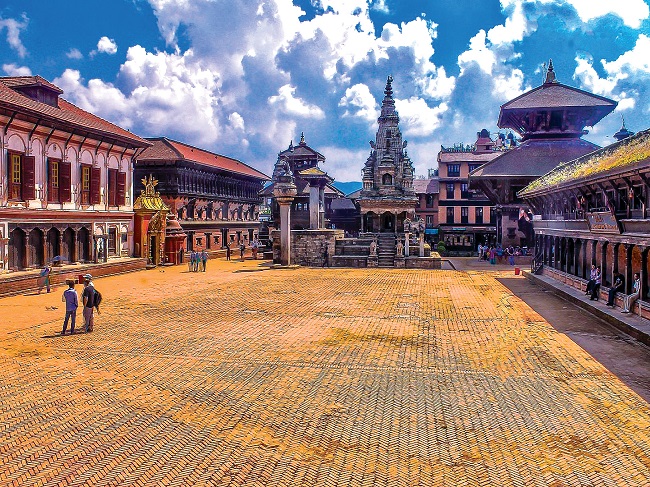
Bhaktapur, situated in the east corner of the Kathmandu Valley, is an ancient Newar town called Bhaktapur, also known as Bhadgaon or Khwopa. It is located in the Bhaktapur District in the Bagmati Zone. It was once the capital of Nepal during the great Malla Kingdom until the second half of the 15th century; it is also the third largest city in Kathmandu Valley. Bhaktapur is also listed as a World Heritage by UNESCO for its rich culture, temples, wood, metal and stone artwork. The term Bhaktapur refers to The Town of Devotees.
It is the home for traditional art and architecture, historical monuments and craft works, magnificent windows, pottery and weaving industries, excellent temples, beautiful ponds, rich local customs, culture, religion, festivals, and musical mystic and so on. Bhaktapur is still untouched my modernization and is well preserved as an ancient city, which in fact, is itself a world to explore for tourist. From time immemorial it lay on the trade route between Tibet/China and India. This position on the main caravan route made the town rich and prosperous.
It is a gem for the entire nation, and the most fascinating structure here is the world-renowned 55 window palace. The elaborately carved windows and doors are something that visitors cannot help admiring. The seat of royalty before 1769 AC, the building now houses the National Art Gallery; this museum is best known for its rich collection of paubha scroll paintings and breathtaking artworks in stone.
The world famous Golden Gate rubs shoulder with the 55 window palace. An unparalleled specimen of art dating back to 1756, it is the entrance to the marvelous Taleju Temple Complex. Getting into it leads to a number of artistically designed courtyards including the Royal Bath, which is adorned with the well-admired Golden Faucet among others.
Another artwork that unfailingly bewitches the visitors in the square is the Big Bell. Big enough to match its name, the bell was erected by Ranajit Malla, Bhaktapur’s last Malla King. It was used in those days for paying homage to Goddess Taleju, the lineage deity of Malla rulers, as well as to call assemblies of the citizens to discuss on given subjects concerning the state. Today, it is rung twice a day as a mark of tribute to the goddess. Right next to it is a smaller Barking Bell, to one’s surprise, all dogs around it start whining the moment it is rang by its caretaker.
The Yaksheswor Mahadev Temple equally adds to the Square’s unparallel beauty. Named after its builder king, Yaksha Malla, the two-storied pagoda was constructed after Kathmandu’s world famous Pashupatinath temple. It is noted for its wooden struts full of erotic pilgrimage sites.